

Ritsleting nilon
Overview
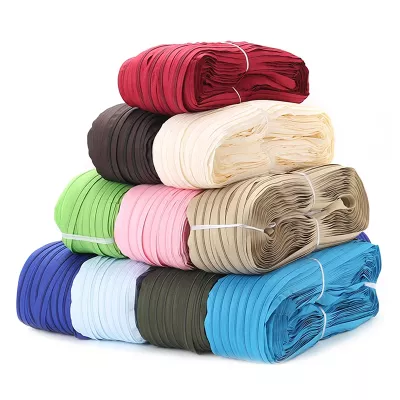
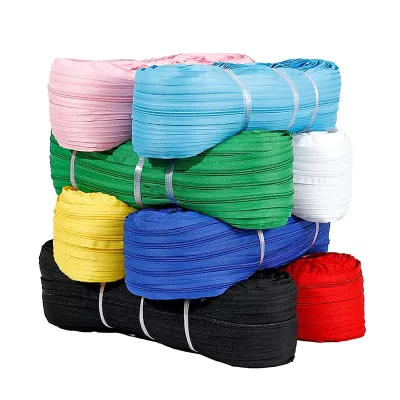
Nylon coil zippers are the workhorse for apparel, bags, bedding and soft furniture: light, flexible, dyeable to almost any shade and comfortable against skin. The variables that decide quality are monofilament consistency, sewing tension, dye-lot control and heat-setting of the tape.
Production Notes & QC Checkpoints
What decides whether this product performs in the field — and what to verify before each shipment:
| Checkpoint | What goes wrong | Verification |
|---|---|---|
| Tape shrinkage | Under-set tape shrinks after washing and pulls the seam (布带缩水). Confirm heat-setting / tape-ironing is specified, especially for garment orders that will be garment-washed. | Measure tape length before and after a 60°C wash on pre-production samples |
| Skipped teeth | Broken monofilament or a worn sewing needle causes local missing teeth. Check needle condition and tension at the start of each shift. | 5% carton inspection for missing teeth |
| Coil alignment | Uneven tape tension makes the two halves drift (链牙歪斜). Confirm guide alignment when the order changes tape width. | Straightness check over 1 m length |
| Dye-lot variation | Colour differences between lots come from dye bath temperature and time drift. Book continuous-dye lots for repeat orders. | Compare each lot with the approved sample under D65 |
| Pull smoothness | A rough pull usually means the slider is mismatched to the coil size or the coil density is off. | Hand pull test on both directions, 20 pcs per lot |
Buyer FAQ
Q1. What is the difference between nylon and plastic zippers?
Nylon zippers use a coiled monofilament sewn onto the tape — flexible and light. Plastic (injection) zippers have individually moulded teeth on a woven tape — stiffer and more dimensionally stable. Bedding and apparel usually choose nylon; heavy bags and luggage often choose moulded plastic.
Q2. Can the zipper be dyed to match my fabric?
Yes, with a colour reference. Please send a fabric swatch or Pantone number; we dye to the approved sample and keep the recipe for repeat orders.
Q3. What tape widths are common?
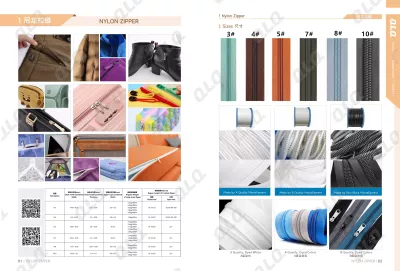
Tape width is normally chosen together with the chain size (#3, #5, #8, #10). Tell us the seam allowance and the fabric, and we will propose a matching tape width.
Q4. How do I avoid shrinkage after washing?
Specify heat-set tape and confirm on a pre-production wash test at your actual wash temperature. Garment-dyed or stone-washed programs need a higher setting.
Q5. Are the zippers OEKO-TEX compliant?
Compliance depends on the exact materials and dyes used. Tell us the standard you need and we will confirm which of our material options can be supported with documentation.
Quick Reference Card
- Chain size + tape width confirmed
- Heat-set tape specified
- Dye lot vs golden sample
- Pull test both directions
- Wash-test result attached to approval
Request a Quotation
Send your specification — material, size, colour, quantity and any standard or test report you require. Our team will confirm feasibility, sampling and lead time.
Urutkan
- Direkomendasikan
- Terbaru