سحاب معدني
Overview
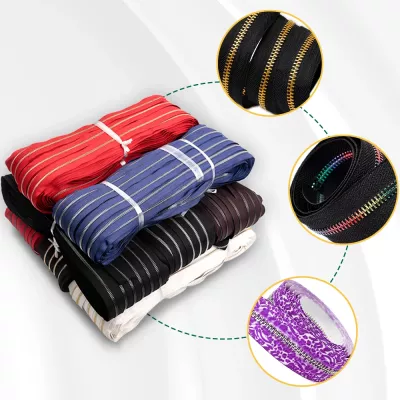
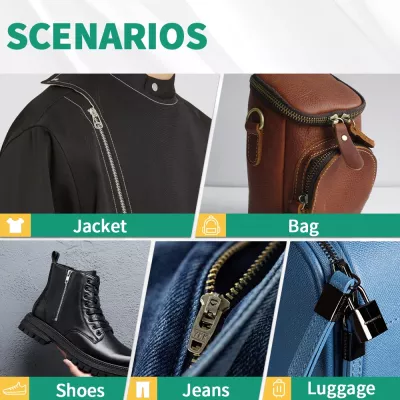
Metal zippers are specified where strength, dimensional stability and a premium surface finish matter: denim and workwear, leather goods, luggage, outdoor gear and upholstery. Tooth profile, slider fit and plating quality together decide how the zipper performs after washing, abrasion and salt-spray exposure.
Production Notes & QC Checkpoints
What decides whether this product performs in the field — and what to verify before each shipment:
| Checkpoint | What goes wrong | Verification |
|---|---|---|
| Tooth engagement | Skip teeth (跳牙) usually trace back to inaccurate tooth feeding or worn dies — check the first 50 pcs of every batch by hand. | Inspect 5% of each carton for missing or misaligned teeth |
| Plating adhesion | Blistering (起泡) comes from incomplete degreasing or acid cleaning before plating. Specify the plating process and salt-spray hours in your PO. | Salt-spray test per order requirement; visual check for blisters and colour drift |
| Slider compatibility | A slider that is too tight or too loose against the tooth profile causes a rough pull or self-opening. Always confirm slider gauge matches the chain size (#3/#5/#8/#10). | Pull-test every slider lot; reciprocating test 500+ cycles |
| Burrs and sharp edges | Insufficient polishing leaves burrs that damage fabric and fail hand-feel checks. Request tumbling/polishing notes for visible metal parts. | Touch-test and visual inspection under 2x magnification |
| Colour consistency | Plating bath drift shows up as batch-to-batch colour variation. Keep an approved sample and compare under D65 light. | Compare each lot against the signed golden sample |
Buyer FAQ
Q1. Which metal zipper size should I choose for denim?
Denim and heavy workwear normally use #5 or #8 brass or aluminium chain. The final choice depends on the load on the seam and the wash process — send us the fabric weight and wash cycle and we will confirm the size.
Q2. Will the plating survive industrial washing?
It depends on plating thickness and the wash chemistry. Tell us the wash temperature, cycle count and any bleach exposure, and we will recommend the finish and request the corresponding salt-spray result.
Q3. Can you match a Pantone or an existing sample?
Yes. Send a physical sample or a Pantone reference; we compare under D65 light and keep the approved sample on file for every repeat order.
Q4. What are typical strength values?
For a metal #5, flat-pull strength is commonly quoted at 800–1000 N, top-stop 100–200 N and bottom-stop 150–250 N. Final values are confirmed against the standard named in your purchase order (ASTM D2061, BS 3084, QB/T 2171).
Q5. Do you supply test reports?
Yes — strength, salt spray and colour-fastness reports can be issued against the standard you specify. Please name the standard and acceptance values in the RFQ.
Quick Reference Card
- Chain size vs slider gauge confirmed
- Plating type + salt-spray hours in PO
- Top/bottom stop strength checked
- Golden sample approved under D65
- AQL level and inspection point agreed
Request a Quotation
Send your specification — material, size, colour, quantity and any standard or test report you require. Our team will confirm feasibility, sampling and lead time.