

Why Electroplating Matters for Metal Zippers
When sourcing metal zippers, the finish is not just about appearance — it determines corrosion resistance, wear durability, and how the zipper integrates with your product's design language. A zipper with the wrong finish tarnishes, scratches easily, or clashes with surrounding hardware. The right finish elevates product quality and reduces returns.
At Hardware Zipper, we offer multiple electroplating and surface treatment options. This guide explains each finish, its technical properties, and how to choose the best one for your application.
Common Metal Zipper Electroplating Finishes
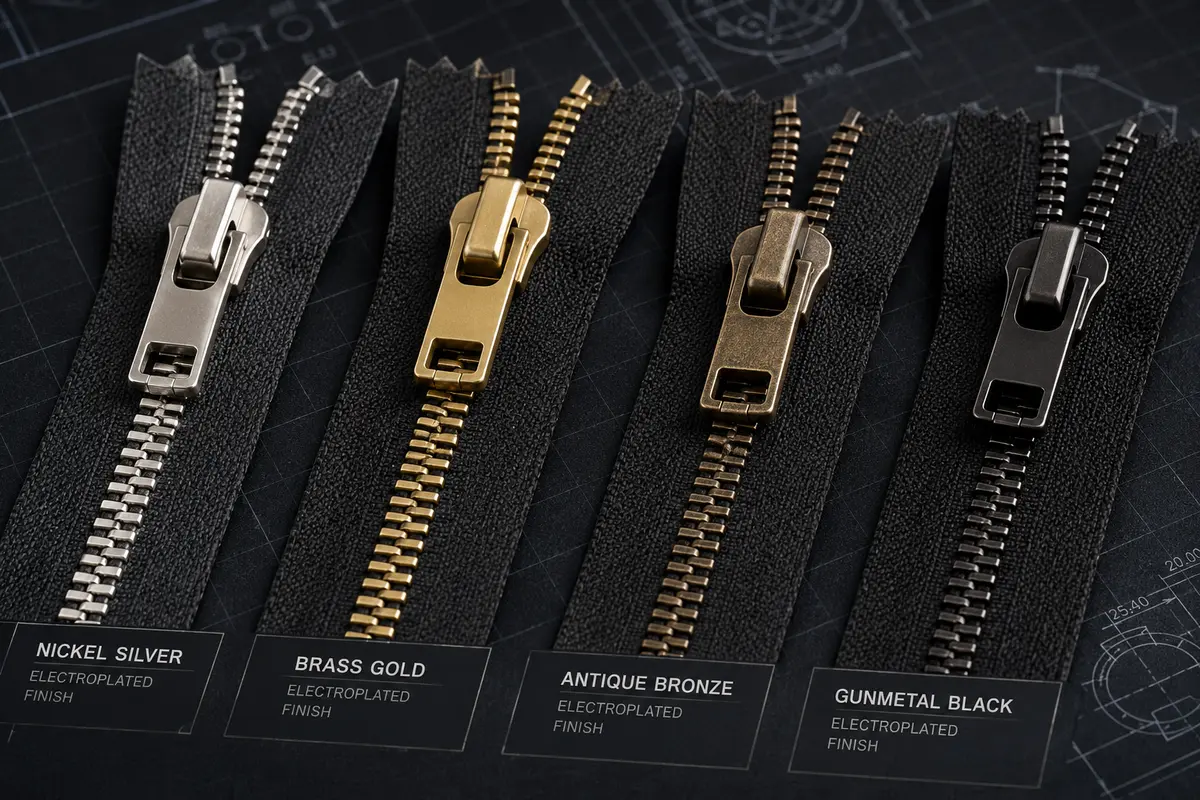
⚪ Nickel Plating
Silver-white metallic finish with excellent corrosion resistance. The most popular industrial finish for its neutral tone that matches most hardware. Salt spray tested to 24–48 hours. Best for: Bags, luggage, general apparel, outdoor gear.
🟡 Brass Plating
Warm golden finish that develops a natural patina over time. Conveys premium quality and vintage aesthetics. Electroplated brass over zinc alloy base. Best for: Luxury handbags, leather goods, premium garments, vintage-style accessories.
🟤 Antique Brass
Darkened brass with an aged, rustic look. Achieved through post-plating oxidation treatment that highlights recessed details. Best for: Heritage brand products, leather luggage, premium denim, craft accessories.
⚫ Gunmetal / Black
Dark gray to near-black finish with a subtle metallic sheen. Modern and sophisticated. Available as electroplated gunmetal or black oxide treatment. Best for: Contemporary fashion, tech accessories, tactical gear, minimalist designs.
The Electroplating Process at a Glance
Quality electroplating follows a multi-stage process:
- Surface Preparation: Zinc alloy sliders and components are cleaned, degreased, and polished to remove casting residue.
- Base Layer: A copper or nickel strike layer is applied to improve adhesion of the final finish.
- Finish Layer: The target metal (nickel, brass, etc.) is electrochemically deposited onto the surface.
- Post-Treatment: Anti-tarnish sealant or oxidation treatment is applied depending on the desired look.
- Quality Inspection: Each batch undergoes visual inspection, thickness measurement, and salt spray testing.
💡 Pro Tip: Always ask your supplier for salt spray test reports. A minimum 24-hour neutral salt spray (NSS) test with no visible corrosion is the industry baseline for quality electroplated zipper hardware.
How to Choose the Right Finish: 4 Decision Factors
1. Product Design
Match the zipper finish to other hardware (buckles, rivets, D-rings). Consistency across metal components signals quality manufacturing.
2. Usage Environment
Outdoor products need maximum corrosion resistance — nickel plating with sealant. Indoor fashion products have more flexibility.
3. Brand Positioning
Brass and antique finishes signal premium/heritage. Nickel signals industrial reliability. Gunmetal signals modern sophistication.
4. Budget
Nickel is the most cost-effective. Brass and antique finishes add 10–20% to unit cost. Custom finishes (rose gold, matte black) are available for volume orders.
Quality Standards to Look For
When evaluating electroplated zipper hardware, insist on:
| Test | Standard | Minimum Requirement |
|---|---|---|
| Salt Spray (NSS) | ISO 9227 | 24 hours, no white rust |
| Plating Thickness | XRF Measurement | ≥ 3μm for nickel, ≥ 1μm for brass |
| Adhesion | Cross-cut / Bend Test | No peeling or flaking |
| Color Consistency | Visual + Spectrophotometer | ΔE < 1.5 batch-to-batch |
Get the Right Finish for Your Next Order
Choosing the right electroplating finish is a small decision that makes a big difference in how your product performs and how customers perceive its quality. Whether you need 5,000 nickel-plated sliders for a bag production run or 500 antique brass zippers for a premium collection, we can deliver consistent, tested finishes.
Contact our team to request finish samples, salt spray test reports, or a custom quote for your specific electroplating requirements.
Production Notes & QC Checkpoints
What decides whether this product performs in the field — and what to verify before each shipment:
| Checkpoint | What goes wrong | Verification |
|---|---|---|
| Tooth engagement | Skip teeth (跳牙) usually trace back to inaccurate tooth feeding or worn dies — check the first 50 pcs of every batch by hand. | Inspect 5% of each carton for missing or misaligned teeth |
| Plating adhesion | Blistering (起泡) comes from incomplete degreasing or acid cleaning before plating. Specify the plating process and salt-spray hours in your PO. | Salt-spray test per order requirement; visual check for blisters and colour drift |
| Slider compatibility | A slider that is too tight or too loose against the tooth profile causes a rough pull or self-opening. Always confirm slider gauge matches the chain size (#3/#5/#8/#10). | Pull-test every slider lot; reciprocating test 500+ cycles |
| Burrs and sharp edges | Insufficient polishing leaves burrs that damage fabric and fail hand-feel checks. Request tumbling/polishing notes for visible metal parts. | Touch-test and visual inspection under 2x magnification |
| Colour consistency | Plating bath drift shows up as batch-to-batch colour variation. Keep an approved sample and compare under D65 light. | Compare each lot against the signed golden sample |
Buyer FAQ
Q1. Which metal zipper size should I choose for denim?
Denim and heavy workwear normally use #5 or #8 brass or aluminium chain. The final choice depends on the load on the seam and the wash process — send us the fabric weight and wash cycle and we will confirm the size.
Q2. Will the plating survive industrial washing?
It depends on plating thickness and the wash chemistry. Tell us the wash temperature, cycle count and any bleach exposure, and we will recommend the finish and request the corresponding salt-spray result.
Q3. Can you match a Pantone or an existing sample?
Yes. Send a physical sample or a Pantone reference; we compare under D65 light and keep the approved sample on file for every repeat order.
Q4. What are typical strength values?
For a metal #5, flat-pull strength is commonly quoted at 800–1000 N, top-stop 100–200 N and bottom-stop 150–250 N. Final values are confirmed against the standard named in your purchase order (ASTM D2061, BS 3084, QB/T 2171).
Q5. Do you supply test reports?
Yes — strength, salt spray and colour-fastness reports can be issued against the standard you specify. Please name the standard and acceptance values in the RFQ.
Quick Reference Card
- Chain size vs slider gauge confirmed
- Plating type + salt-spray hours in PO
- Top/bottom stop strength checked
- Golden sample approved under D65
- AQL level and inspection point agreed
Request a Quotation
Send your specification — material, size, colour, quantity and any standard or test report you require. Our team will confirm feasibility, sampling and lead time.